This is an oldie but goodie...
I first heard, "always keep a wool blanket in your car" after I bought my first car from my uncle and my father. Both were military men so of course being a young man, I completely ignored that advice
It wasn't until years later I learned why they gave this advice. A wool blanket is a multiple purpose tool- not just for winter. However, in winter if you are stuck on the side of the road a wool blanket literally could be the difference between having a bad day or your last day. That might sound hyperbolic but we have all seen in recent years entire states that have no idea how to deal with even a few inches of snow. As owners of Bronco's we have to consider that we could become stuck in a situation not because we are stuck but because everyone around us is. Thus, having a wool blanket is still a good piece of kit to consider today.
Why wool?
1) it allows your body to properly thermally regulate (e.g. moisure wicking, breathability)
2) water resistant
3) fire resistant
4) retains significant abilty to still trap heat when wet
5) retains ability to warm when compressed- laying will increase warmth or R value
5) naturally resistant to holding odors (anti-baterial) and also hypoallergenic
6) naturally resistant to stains
Why not wool?
1) weight
2) cleaning, when needed, might require special treatment
3) can be expensive
4) may have a strong "wool smell" that will take a couple of days to disapate.
How can a wool blanket be used?
1) improvised coat to help reduce heat lost via convection
2) improvised sleep system (aka "wool burrito")
3) emergency shelter
4) bottom layer to reduce heat loss via conduction
You'll also need some sort of "belt" in case of #1. In my pictures you'll see I use paracord.
When it comes to VEDC, we're mostly concerned with being able to stay warm while stationary. If you are going to be stuck in your vehicle for a prolonged but projected amount of time (such as when you have a rescue in progress and you are now just waiting) you may need to conserve fuel. Bronco's get pretty toasty so what you can do is grab your wool blanket and put it over you and tuck it in around you (including behind your legs). It should be a bit loose because the way this will work is that your body will warm the dead air surrounding body and the wool hold it in. Wait until you feel comfortable and then turn off the vehicle. As long as you don't move around too much you won't feel that chill for quite awhile. The calories you're processing will go to keeping you warm (thermogenesis). If you start to sweat, that vapor will be wicked away to the outside of the wool so you stay dry. You can still easily let a lot of heat out depending on how you wrap yourself. With wool, it may take awhile to feel comfortable so you just have to be patient. In really cold temps, you might have to restart the Bronco and let it warm you again.
A worst case is being stuck overnight OR having to abandon your vehicle- which is as a last resort. This is more complex topic that is out of scope for a VEDC conversation but it felt weird not to mention it. The idea of a improvised sleep system is not much different than car camping. Only difference is that you are going to burrito yourself in a wool blanket instead getting into a sleeping bag. Both are options but sleeping bags are not as simple to use as people think. From what I've seen, people are more likely to hard issue being comfortable in a modern sleeping bag because of thermal regulation issues than with a wool blanket. Both solutions requires practice so that you are not trying to learn on the fly.
Similarly, having an improvised coat probably seems unneccessary. You're already wearing a winter coat so why would you need another? Chances are what you wearing is bulky, heavy and make of synthetic fibers. Walking even 2 miles in winter conditions will have you burning through calories, feeling uncomfortable and overheating. Your body can't thermally regulate and longer story short, you end up fighting yourself more that you should which is a waste of energy. Layering with wool and other natural fibers is what people have done through the centuries to address this problem. The issue with modern clothing is that we are likely to not have the right combination of layers. For instance, items made out of down are very warm- much warmer than wool as soon as you put it on. That loft of feathers traps heat but it enclosed in a synthetic fiber shell. That shell, may or may not be waterproof but in either case the inner material is not moisure wicking. The breathabiliy of a down jacket means eventually water (e.g. you sweating) will get in. Wet down looses its ability to trap heat so you can imagine what happens as you continue to sweat.
Learning different ways to wear a wool blanket can help you here but that is only one part of the system. Fortunately, this is something you can practice at home. With the prolonged freeze that has hit most of the country now, I've been practicing this myself since I live in a house that was built in the 1800's. Once it's cold enough the heating system is only going to keep things in the lower '60's. I've been wearing my wool blankets in ether a "match coat" (what was typical in the revolution war) or "monk" (think "jedi" if you prefer) style. There are various Indian methods of course the "great kilt" method as well. You'll find there are lots of video from bushcrafters, campers, outdoorsman and even reenactment folks that show these and other ways to use wool blankets. There is plenty to play around with. You may even want to turn down your thermostat to save some money on your energy bill. More importantly, if you ever lose power at home, the same skillset can be use to prevent you from freezing.
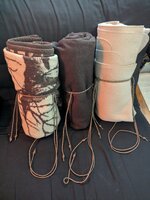
Despite recognizing the value of having a wool blanket it wasn't until just this last December (about 6 week ago from when I wrote this) I found a couple of well reviewed and cost effective options from a company called Arcturus (https://www.amazon.com/stores/page/...75375657f08&store_ref=bl_ast_dp_brandLogo_sto). I bought one that is 100% virgin wool (on the right in the picture) and another that is an 80% virgin wool blend (in the middle). Both are 4.5lbs and pack down the same size as another non-wool blanket I have (on the left in the picture). While there is a huge diffence in warmth I can feel between the wool and non-wool blankets. I don't think there is much of a difference between the 100% and 80% wool. The 100% initially had a stronger smell but it dissapated over 3 days just like the 80% did. The 100% is more money but still under $100. In past years, I could not find anything under $100 and getting an army surplus or something from a thrift store is not want I wanted to do. I still do have a sleeping bag that lives in the Bronco but once I'm comfortable with the wool blanket sleep system, I might remove that and only carry the wool blanket. These wool blankets are both 88"x64" which are a bit small for a sleep system so I might get a queen size in to see how that works. Even with the size I have, it is possible to have a hood in both styles I've been wrapping myself. For me that's actually too warm but its great to know I can be that much warmer if I need to.
This is one of those topics that makes you appreciate people from past generations who, with far less scientific understanding, still could harness what they did know to survive what many people would not know how. Low tech and old tech is often still viable so I find it pretty cool use modern 4x4 tech like our Bronco to get us to places in nature away from civilization and then use centuries old tech like a wool blanket to keep us warm by a camp fire...
...or on icy highway that has stalled traffic.
I think my dad and uncle are smiling.
I first heard, "always keep a wool blanket in your car" after I bought my first car from my uncle and my father. Both were military men so of course being a young man, I completely ignored that advice
It wasn't until years later I learned why they gave this advice. A wool blanket is a multiple purpose tool- not just for winter. However, in winter if you are stuck on the side of the road a wool blanket literally could be the difference between having a bad day or your last day. That might sound hyperbolic but we have all seen in recent years entire states that have no idea how to deal with even a few inches of snow. As owners of Bronco's we have to consider that we could become stuck in a situation not because we are stuck but because everyone around us is. Thus, having a wool blanket is still a good piece of kit to consider today.
Why wool?
1) it allows your body to properly thermally regulate (e.g. moisure wicking, breathability)
2) water resistant
3) fire resistant
4) retains significant abilty to still trap heat when wet
5) retains ability to warm when compressed- laying will increase warmth or R value
5) naturally resistant to holding odors (anti-baterial) and also hypoallergenic
6) naturally resistant to stains
Why not wool?
1) weight
2) cleaning, when needed, might require special treatment
3) can be expensive
4) may have a strong "wool smell" that will take a couple of days to disapate.
How can a wool blanket be used?
1) improvised coat to help reduce heat lost via convection
2) improvised sleep system (aka "wool burrito")
3) emergency shelter
4) bottom layer to reduce heat loss via conduction
You'll also need some sort of "belt" in case of #1. In my pictures you'll see I use paracord.
When it comes to VEDC, we're mostly concerned with being able to stay warm while stationary. If you are going to be stuck in your vehicle for a prolonged but projected amount of time (such as when you have a rescue in progress and you are now just waiting) you may need to conserve fuel. Bronco's get pretty toasty so what you can do is grab your wool blanket and put it over you and tuck it in around you (including behind your legs). It should be a bit loose because the way this will work is that your body will warm the dead air surrounding body and the wool hold it in. Wait until you feel comfortable and then turn off the vehicle. As long as you don't move around too much you won't feel that chill for quite awhile. The calories you're processing will go to keeping you warm (thermogenesis). If you start to sweat, that vapor will be wicked away to the outside of the wool so you stay dry. You can still easily let a lot of heat out depending on how you wrap yourself. With wool, it may take awhile to feel comfortable so you just have to be patient. In really cold temps, you might have to restart the Bronco and let it warm you again.
A worst case is being stuck overnight OR having to abandon your vehicle- which is as a last resort. This is more complex topic that is out of scope for a VEDC conversation but it felt weird not to mention it. The idea of a improvised sleep system is not much different than car camping. Only difference is that you are going to burrito yourself in a wool blanket instead getting into a sleeping bag. Both are options but sleeping bags are not as simple to use as people think. From what I've seen, people are more likely to hard issue being comfortable in a modern sleeping bag because of thermal regulation issues than with a wool blanket. Both solutions requires practice so that you are not trying to learn on the fly.
Similarly, having an improvised coat probably seems unneccessary. You're already wearing a winter coat so why would you need another? Chances are what you wearing is bulky, heavy and make of synthetic fibers. Walking even 2 miles in winter conditions will have you burning through calories, feeling uncomfortable and overheating. Your body can't thermally regulate and longer story short, you end up fighting yourself more that you should which is a waste of energy. Layering with wool and other natural fibers is what people have done through the centuries to address this problem. The issue with modern clothing is that we are likely to not have the right combination of layers. For instance, items made out of down are very warm- much warmer than wool as soon as you put it on. That loft of feathers traps heat but it enclosed in a synthetic fiber shell. That shell, may or may not be waterproof but in either case the inner material is not moisure wicking. The breathabiliy of a down jacket means eventually water (e.g. you sweating) will get in. Wet down looses its ability to trap heat so you can imagine what happens as you continue to sweat.
Learning different ways to wear a wool blanket can help you here but that is only one part of the system. Fortunately, this is something you can practice at home. With the prolonged freeze that has hit most of the country now, I've been practicing this myself since I live in a house that was built in the 1800's. Once it's cold enough the heating system is only going to keep things in the lower '60's. I've been wearing my wool blankets in ether a "match coat" (what was typical in the revolution war) or "monk" (think "jedi" if you prefer) style. There are various Indian methods of course the "great kilt" method as well. You'll find there are lots of video from bushcrafters, campers, outdoorsman and even reenactment folks that show these and other ways to use wool blankets. There is plenty to play around with. You may even want to turn down your thermostat to save some money on your energy bill. More importantly, if you ever lose power at home, the same skillset can be use to prevent you from freezing.
Despite recognizing the value of having a wool blanket it wasn't until just this last December (about 6 week ago from when I wrote this) I found a couple of well reviewed and cost effective options from a company called Arcturus (https://www.amazon.com/stores/page/...75375657f08&store_ref=bl_ast_dp_brandLogo_sto). I bought one that is 100% virgin wool (on the right in the picture) and another that is an 80% virgin wool blend (in the middle). Both are 4.5lbs and pack down the same size as another non-wool blanket I have (on the left in the picture). While there is a huge diffence in warmth I can feel between the wool and non-wool blankets. I don't think there is much of a difference between the 100% and 80% wool. The 100% initially had a stronger smell but it dissapated over 3 days just like the 80% did. The 100% is more money but still under $100. In past years, I could not find anything under $100 and getting an army surplus or something from a thrift store is not want I wanted to do. I still do have a sleeping bag that lives in the Bronco but once I'm comfortable with the wool blanket sleep system, I might remove that and only carry the wool blanket. These wool blankets are both 88"x64" which are a bit small for a sleep system so I might get a queen size in to see how that works. Even with the size I have, it is possible to have a hood in both styles I've been wrapping myself. For me that's actually too warm but its great to know I can be that much warmer if I need to.
This is one of those topics that makes you appreciate people from past generations who, with far less scientific understanding, still could harness what they did know to survive what many people would not know how. Low tech and old tech is often still viable so I find it pretty cool use modern 4x4 tech like our Bronco to get us to places in nature away from civilization and then use centuries old tech like a wool blanket to keep us warm by a camp fire...
...or on icy highway that has stalled traffic.
I think my dad and uncle are smiling.